
There goes the neighborhood

As someone engaged in the 24-7 business of building community in an inner ring suburb, one thing becomes abundantly clear: when it comes to people’s perceptions, we don’t get a second chance. It’s as if people are waiting for confirmation that we are, as some online commenters like to say, circling the drain. Any report of a theft, an arrest at the supermarket, a group of kids walking home being loud and obnoxious, too much litter on the ground, and it confirms their worst suspicions—“This place is on the decline. Better get out while you can!” Of course these things happen everywhere. The difference is, when they happen in a more uniformly upscale community, they are outliers—not representative of a negative trend like they are when they happen in a city like ours. Those cities get the benefit of the doubt. We never do.   We’ve learned to accept that everything is harder here. Every victory is hard won. The decks are stacked and we have to work harder and be more innovative, just to keep our heads above water. We can’t work a regular 40-hour week and expect that to be sufficient. We need to attend the block group picnics, answer the emails, texts, and Facebook messages at night and on the weekends, to reassure even the most committed residents that everything will be okay. We drive out to a vacant house on Sunday to get someone to shut off the water that’s pouring from the basement windows. We pull weeds in the park because we don’t have enough staff to handle it. Why does it have to be so hard?

We are the middle class. Just like the rest of middle class America, we are stretched too thin. We wonder how much longer we can hang on. Inner ring suburbs are the canaries in the coal mine. What happens here happens on a larger scale everywhere. As smaller suburbs, we’re the perfect sample size to spot trends. Predatory lending, mortgage foreclosures, strategic defaults, growing property tax delinquency, bank walkaways—we’ve spotted them here first. Like a mother who knows instinctively that something is wrong with her child, we know these places intimately and we quickly know when something goes amiss.

The frustrating part is that it doesn’t have to be this way. Lots of people thought it was a great idea to keep spending money building roads and infrastructure that would cause  cities like ours to hollow out, encouraging those with greater means and the desire for new and bigger housing to move to suburbs further and further out, leaving us with the same infrastructure to maintain with fewer and fewer resources to do it. Since our region doesn’t share equally in these costs, cities bear the burden of maintaining themselves as resources diminish. Taxes go up to compensate, and already squeezed residents find it harder and harder to justify paying more and getting what seems like less.  As sidewalks and roads start to crumble, the naysayers’ negative assumptions get reinforced and more people leave, making it a vicious self-fulfilling prophecy. Soon a suburb that was founded on the American Dream, becomes a city of broken dreams. The post-war bungalows that suited our parents’ and grandparents’ generation seem tired, too small, and past their prime–no longer good enough for our young families. Many who remain see little value in improving the homes, and have difficulty finding a lender to help make that happen even if they wanted to invest in improvements. Real estate agents do little to help, as many tend to reinforce the notion that these homes aren’t worth improving. They advise homeowners that a gourmet kitchen and flagstone patio won’t be investments that can be recouped at resale time.

As our schools shifted in their demographic mix, hitting some unspoken tipping point, many residents lost confidence and expressed it by either moving away or choosing a private school that puts their finances further on tilt—money that could have been invested in the upkeep of their homes or towards their children’s college education. As a result, the demographics of our schools no longer match the demographics of the communities they serve—having become predominately minority and higher poverty. Not surprisingly, state test scores decline and yet another self-fulfilling prophecy is realized. Local media are only too happy to publish school rankings and sites like Zillow create handy color-coded school rating systems based on dubious metrics that further steer prospective homebuyers to higher-income exurban locations. This is the new face of redlining for our era. What homebuyer who has a choice would choose to move to a school district with a red or yellow rating on Zillow? Even if they have no children, they worry about resale. Those of us with children in these school districts know first-hand that our kids are getting a great education, but these pervasive perceptions affect everyone, hurting the children attending the schools, the faculty, and the community.

After a while the self esteem of the community falters. We no longer expect anything good to happen. We don’t expect to get a beautiful new retail district or see new homes being built. When those things occur, they are regarded with suspicion. With that kind of negative community narrative, is it any wonder that new residents aren’t attracted to the area? Realtors discreetly (and illegally) tell some house hunters that they “might prefer another area”. So why bother? Why does it matter if another inner-ring suburb goes down the drain?

Nature abhors a monoculture. Just as a field planted with one type of crop is more prone to disease than a wider variety of crops, diversity creates a stronger community. Inner ring suburbs by their nature are diverse, accommodating all people across a wide variety of cultures, race, and income levels. When I see our community, I see infinite potential. I’ve seen first-hand how our houses can be transformed into showplaces. When maintained well and attractively improved, our homes sell quickly, many times above their asking price.  I know because of my own family’s experience that our schools are great in spite of the rumors and the decline in state rankings. We have the potential to be amazing, and I hate to see wasted potential. Because of our central location, we can be almost anywhere in minutes. Great shopping, restaurants, breathtakingly beautiful parks, and healthcare options are within walking distance. We have terrific access to public transportation, eliminating the need to commute to many locations by car. Our housing stock is diverse, well constructed, and affordable. As one resident likes to say: “we may have a small house, but we have a big life”. Not overspending on housing has allowed them the flexibility to travel widely and live out their dreams. Many of our residents do the same, having paid off their homes, their lives are now their own. They are not living one paycheck away from catastrophe. We are seeing more young professionals moving in as well—student loan debt making our affordability very attractive. The key will be retaining them in the years to come.

All of this unrealized potential comes at a high cost. The cost of maintaining infrastructure for a region that keeps sprawling is not sustainable. Hunter Morrison’s extensive research for Vibrant NEO 2040 spells out the risks of not changing course and shows exactly how these negative trends can be reversed by making better policy decisions now. Why not support and maintain what we already have? It’s far more sustainable and cost effective, especially when you consider that one way or another, we will have to support it either by fixing it, or dealing with the aftermath, including shifting tax burdens to outer communities if we don’t. Compounding these sobering trends, the state has taken away sorely needed resources from cities including the Local Government Fund, to add to the state’s “Rainy Day Fund”. We need to let Governor Kasich know that while the sun might be shining at the State House, it’s raining in the inner ring suburbs.

These policy decisions are critical and it’s our responsibility to speak loudly to lawmakers about our needs, but the every day decisions that we make can be just as important. We can maintain and improve our homes with the confidence that values are going to increase, support our schools by sending our children there, and get involved in our community by joining a neighborhood group, volunteering, or even just picking up trash when we see it. In spite of the obstacles, and perhaps because of them, I am more determined than ever to help everyone see the potential of our core suburbs. Inner ring suburbs are truly great and affordable places to call home, we just need to stop sabotaging ourselves and do our part to create the kind of community we want to live in. As urban revitalization strategist Majora Carter says, “you shouldn’t have to leave your neighborhood to live in a better one.”                                     –Sally Martin
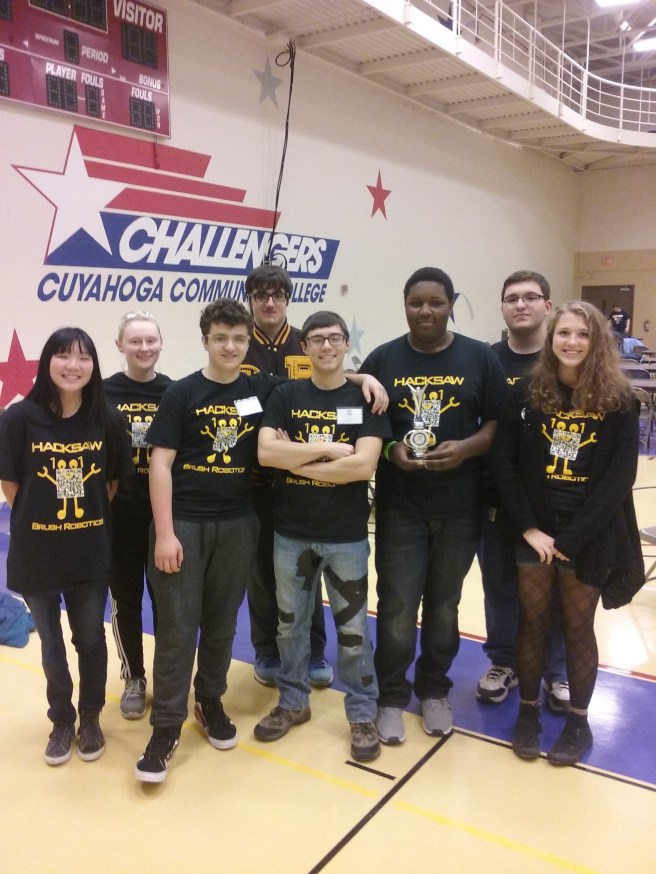
 

Just Wait Until You Hear What These Brush Kids Did…

Sometimes at the SEL Experience Project, we get a scoop so great that we just can’t wait to share it.  Right now, we’re so full of ARC pride, we just might burst! The Brush Robotics team took the highest possible award at last weekend’s qualifying tournament at Kent State University. After taking the second place alliance at Tri-C in January, the team went on to to earn Captain of the winning alliance at Kent against 24 other teams–the highest award possible!  The Brush team also took the Control Award, which is given for the best use of sensors and robot control algorithms.  They will go on to compete in the state championship in Cincinnati this weekend.  Way to go Brush Robotics Team!!!

If you have a great ARC story to share, please email us at selexperienceproject@gmail.com.  Don’t forget to include some adorable pictures!  We love to share the great news, so keep it coming!Brush Robotics Team

Tell Us Why You Love Attending SEL Schools!

If you’re a current SEL student, tell us about your experience.  We may post it on the blog and share it on social media.  Don’t forget to include a photo!  Cut and paste these questions into an email and send it to us at selexperienceproject@gmail.com.

What is your name and grade?

What school do you attend?

What do you like the most about your school?

What activities are you involved in?

Who are your favorite teachers?

What are your goals for the future?

If there was one thing you could change about your school what would it be?


The (Abusive) Power of the Press

Our “friends” at Northeast Ohio Media Group are at it again. If it wasn’t enough to muckrake and scandalize every benign story coming out of the inner ring suburbs, tweeting out the police blotter, gleefully baiting the trolls that anonymously spew their soul-crushing racist venom, we now have this little gem.  Disguised a bit like a mommy-blog, Laura Johnston’s latest article, published on January 31st, manages to accomplish many things at once.  She tears down CH-UH schools, perpetuating the myth that the schools are bad, complains about the property taxes in her suburb (which she only describes as “The Heights”), and with one mouse click, plunges another inner-ring suburb’s reputation further into disrepair.

CH-UH Schools also serves part of South Euclid.  We are all in this together. We should expect more from our local media.  Tearing down a community and a school district that has been doing great work and fighting endlessly to restore community confidence is not acceptable.  Our friends at the Heights Coalition for Public Education and the CH-UH PTA Council are co-sponsoring a rally on Wednesday, February 17th at 9 am at Boulevard School to show their support to students and faculty on the day the state test scores are announced, as a way to say, “we are more than a score”.  As we know, these arbitrary measures favor the least diverse, most affluent schools and further encourage segregation.  It’s time to take a stand.  Let’s stand together for our communities and our schools.

Tell us why you love teaching at SEL Schools!

Please copy and paste your answers to the following questions and email them to us at selexperienceproject@gmail.com and we may use them in an upcoming blog post! Don’t forget to include a picture!

What is your name?

Where did you attend college?

How long have you been teaching in SEL Schools and where else have you taught?

Where do you teach and what subjects do you teach?

What do you love about teaching in SEL Schools?

Tell us about some of your most meaningful accomplishments.

Tell us why your family chooses SEL Schools!

Please copy and paste your answers to the following questions and email them to us at selexperienceproject@gmail.com and we may use them in an upcoming blog post! Don’t forget to include a family picture!

Where do you live and how long have you lived there?

How many children do you have and how old are they?

Where do your children attend school?

What do you like about SEL Schools?

What do you wish people knew about SEL Schools?

Madeleine Hirsh, Class of 1999

We were thrilled to hear from Madeleine Hirsh and get the skinny on all the amazing things she has accomplished since her graduation from Brush in ’99.

Where did you attend college, what was your major, and what year did you graduate?

Duquesne University, Business/IT, 2003

What are you doing now and where do you live?

I’m a Project Controller for Benefitfocus which is a leading provider of benefits technology that supports more than 25 million consumers in the Benefitfocus Cloud.

I live and work in Charleston, SC which is part of the coastal Carolinas.

Prior to Benefitfocus, I spent about 10 years in the public and federal sectors of Deloitte where I worked as a Manager delivering award-winning IT solutions. I also worked for the U.S. State Department as an E2 Migration Specialist.

Highlights of my career so far:
* Certified Project Management Professional (PMP) and twice-certified by Harvard University in Management and Leadership
* Served as the Application Manager for the Federal PCIP program
* Had the pleasure of working for clients all over the country including a month I spent living and working in Mumbai, India
* Implemented successful State Exchanges for the nation’s 2013 Health Care Reform as part of my work on the Deloitte Health Insurance Exchanges. Kentucky’s Health Insurance Exchange (HIX) system was featured in Time Magazine and specifically acknowledged by the President of the United States in his 2014 State of the Union address
* Certified by the U.S. CEBS / Wharton School in Group Benefit Design

What activities were you involved in while at SEL Schools?

Drama Club, Thespian Troupe #583, Student Congress, Orchestra, Key Club, Bible Study, SADD, Chorale, Computer Club, AV Aide

In what ways do you feel that SEL Schools prepared you for your future endeavors?

Drama Club and Thespian Troupe #583 (advised by Mrs. Jean Wall) shaped my high school experience – Mrs. Wall is an amazing person and I thank her to this day.

Brush also had a fantastic English Department which left me well-equipped for college and beyond

AP Computer Science opened doors for a career in IT

There were other experiences at Brush- such as learning Japanese, that were unique and exciting.

What are some of your favorite memories, teachers, or classes from SEL Schools?

Mrs. Jean Wall and Mr. Norm Rogozin were my favorite teachers at Brush – really, the entire English department was fantastic but they were my favorite teachers.

If there was one thing you wish people knew about SEL Schools, what would it be?

I would want people to know about the great opportunities in the public school system. I’d also want them to know about the great teachers and friends I made.Madeleine Hirsh

Catch up with Ashley Berman, Class of 2007

Thank you Ashley for taking the time to update us on your life since graduation!

Where did you attend college, what was your major, and what year did you graduate?

Bowling Green State University, Communication Sciences and Disorders, BS 2011
The University of Akron, Masters of Art in Special Education 2015
Florida Institute of Technology, Board Certified Behavior Analyst course sequence 2015
What are you doing now and where do you live?
I am wrapping up my work at Bellefaire JCB at the Monarch Center for Autism and am heading to Baltimore to work in the NeuroBehavioral Unit at the Kennedy Krieger Institute. I work as a behaviorist.

I own a home in South Euclid with my fiancé.

What activities were you involved in while at SEL Schools?

Almost every extracurricular activity, but primarily Soundsation showchoir, President of Thespian Troupe #583, and Marching Band!

In what ways do you feel that SEL Schools prepared you for your future endeavors?

SEL schools prepared me in ways that I began noticing right when I got to college. First, the diverse group of students I learned along side shaped who I am today. The learning opportunities at Brush were, and are excellent. Not only could I take fascinating coursework such as African-American History and Creative Writing, but I was privileged to learn from some of the most dedicated teachers. I remember sitting in writing 102 (thanks to Brush I didn’t even have to take the introduction course) and being astounded that no one knew how to write a thesis statement-Mrs. Falkenburg would have never let that slide in her classes! Thanks to my wonderful teachers I was able to flourish in college having the confidence to tackle even the most challenging coursework. Lastly, and maybe most importantly, being an SEL student afforded me opportunities to develop and express my love of music and theater. Our involvement with the International Thespian Society shaped me immensely into the person I am today.

What are some of your favorite memories, teachers, or classes from SEL Schools?

Ashley Berman 1

All of them? Advanced creative writing with Mrs. Kaprosy was definitely one of my favorite classes. Band camp, being in all-ohio musicals, directing shows, hanging out with Mr. Bubnow in the AV department, everything that happened with Mrs. Falkenburg…

If there was one thing you wish people knew about SEL Schools, what would it be?

Currently, one of my best friends is the vocal music director for Brush which keeps me involved  with the school. I wish people knew that it hasn’t truly changed. Fundamentally, all of the aspects that made my experience so great are still there; the teachers, the classes, and the extracurriculars are all still thriving. Education is what you make of it, and the SEL school district puts it all on the table, but it’s up to parents to instill the drive in their kids to take full advantage of what is being offered.

Reader Reactions to “The Problem No One Talks About”

The last two weeks have been a whirlwind of activity at the SEL Experience Project.  The articles written by Sally and Beth have opened up a lot of positive dialog.  The comments we received on social media were especially inspiring and motivating.  We wanted to share some of them here.  Best of all, no trolls had to be taken down to bring you this recap! This tells us that there is a strong foundation of support for our schools.  It’s our goal to take this spark and turn it into a roaring bonfire of community support for SEL Schools.  We can do it together!  Every conversation and interaction you have can help turn detractors into supporters.  Destination School Community?  Maybe not quite yet, but we’re getting there!

_____________________

“Dear Ms. Martin, Thank you for sharing such an honest and personal story. I’ve worked in service-learning at a local university and was deeply wounded by the perception embraced by many that schools with predominantly minority children was inferior, the children were inferior and the notion that minority children were synonymous with poverty, being unloved, and “ghetto”. It is many times difficult to break down those negative perceptions when you are a minority but I’m so glad you wrote this piece. Thank you.”

__________

“Proud mom of three Brush Graduates. My Son (a 2014 graduate) was very involved. He was in the. Brush Band, Jazz Band, Choir and Drama and AVID. He is an outstanding college student and works to better the city around his school (an economically struggling area). Brush provided many opportunities for my children.”

__________

Proud mom of two Brush graduates- it infuriated me when I heard derogatory, negative comments from ignorant people about the school. I have a nurse and a son about to graduate from JCU, by the way, thanks to Brush.”
___________
“Send your kids to our SEL schools!! There is no better way to support our schools and ensure the continued excellence of the educational experience for our community. Thank you Sally for your honesty and for setting an example. My daughter graduated from Brush and my grandchildren are flourishing at Memorial this year.”
__________
“Well written piece. Our children (a sophomore, 8th and 6th grader) are thriving in the SEL schools. In fact, I remember when we moved in 2011 FROM South Euclid TO ANOTHER house in South Euclid so many people were surprised that we didn’t make the jump to the Solons and Twinsburgs of the world. We stayed because we love the community and our kids are receiving a quality education.”
__________
“My oldest son has been in the district since kindergarten. He’s in 7th grade now. We did move for 2 years to mayfield but we decided to come back to south Euclid. My step daughter has been in this district since 4th grade and she is also in 7th. Our youngest will be going to kindergarten next year. We are very pleased with this district. My kids love going to school and love their school! They both are in honors classes and I believe are getting a great education. When at mayfield they got made fun of all the time. My son often asked if he could go back to Rowland. The kids here treat him so much better and he’s way happier. I love the teachers and everything about this district.”
__________
“As I’ve sat on the PTA scholarship committees for over 15 years and have interviewed the wonderful graduating seniors, I have consistently been impressed by the quality of students and opportunities available to them. One resounding and recurring theme is that the students appreciate the diversity that the district offers and how it prepares them to succeed and navigate the real world as they embark upon their post graduate pursuits.”
__________
“It is about time for this conversation to start.”
__________
“Excellent and honest article. I have seen this play out in many districts during the time I worked as as a real estate agent. I, too, live in South Euclid. I drive half an hour to take my kids to school in another district.
I would like to send them to SEL schools but I believed the naysayers.
I am open to giving them a try as my oldest boy approaches high school. But, before that happens I would like to spend a day at the school, observing classes in session.
Heights High had an open house for realtors back when their schools started experiencing the flight and it totally changed my perception of the school.”
__________
“Neighbors, I encourage you to visit the schools during the school day. Please don’t rely on here-say.”
__________
“I am so encouraged to see SEL families uniting! If those of us who believe in our schools actually speak up, a lot of the negative perceptions would be put to rest!! Visit our schools, talk to involved parents/community members and see for yourself.”
__________
“This is a great article and definitely needs to be printed in the Plain Dealer and on Cleveland. Com. We moved into the district in 2004 because of the diversity since we have mixed race kids. We loved it here and still do. I have noticed the lack of diversity in the schools and it saddens me. I assumed it was due to “white flight” as the inner city moved farther east but to hear the actual demographics of the city hasn’t actually changed much is alarming. When my daughters (now a senior and sophomore) were approaching Greenview age, I heard the rumors as well but we didn’t have the funds to choose a private school. Neither had any issues at Greenview or Memorial or even Brush other than normal teenage drama. It was all unfounded. To hear that white middle class parents aren’t even giving the schools a chance due to rumor is sad.”
__________
“Great read Sally Martin. Very well thought out and positioned. We live on one of the streets where many of us could have easily picked upped and moved to another community. Most of us conciously made the decision to stay in this district and have been so glad we did many times over. The thing that is somewhat troubling to me though, is I hear so many Brush graduates who are at the age of purchsing their first homes saying they would never think of buying here now. We need to somehow change that.”
__________
“Realtors, as well, need to stop insinuating that our schools are lacking.”
__________
“I love this article – I think we have good schools, even though my kids are grown, their kids attend SEL schools. My grandkids don’t see black and white – that is not a problem at all.”
__________
“My son goes to Brush and my daughter goes to Memorial. I wouldn’t think of sending them anywhere else!”
__________
“I completely relate to this. I have a whole story about buying a house in South Euclid and why we did and our experience with Adrian Elementary, Greenview, Memorial, and Brush. . I work in Mayfield with the public and i hear negative stuff about South Euclid and our schools way too often… it drives me crazy, and I am a very verbal and staunch supporter of South Euclid and our schools. Anytime, anywhere, for any reason, myself, my husband, and our children will always be ready and willing to speak up for our schools and community. .. i have so so much more to say about this subject!! “
__________
“This is an excellent article for a long overdue conversation on the issue. This is something that should be in the city magazine…verbatim.”
__________
“What is distressing is how little is said about our great Elementary Schools and the honors they’ve achieved. Multiple Governor’s awards as schools of promise, excellent state rankings that exceed that of our middle and high schools, and the dedicated teaching staff that have created an enriching and nourishing academic environment. While the focus had been on Memorial and Brush, the district and the community need to advance the successes at the lower elementary schools. It is there that we must capture student excitement for learning and create students that seek become successful not only today but tomorrow as well. My experience has shown me that working together for success breeds greater social interaction amongst cultures and benefits the community in innumerable ways. Thank you for your continued work with the South Euclid Experience Project and this thoughtful article.”
__________
“Well written piece. I appreciate your bringing this to the surface. My kids, too have had positive experiences in the schools yet I have seen a number of friends either avoid them all together and or flee to another suburb. Both boys (now 4th and 5th) have been in the district since K and have each had different and outstanding teachers almost every year.”
__________
“We moved to south euclid before our children started school. I personally have been bragging for years about the district. I have worked with inner city youth for years, and se-lynd schools are great. They are very organized and informative. The schools keep the parents involved, which is the reason I believe that any school system is successful. Honestly I chose this area based on its diversity. I regularly see children playing outside from all races. However when it is time for my kids to get on buses for school or walk I no longer see that. This articles explains the reasoning for that. My children have acquired many friends during the time that they have spent in the community. They go to these friends homes and they come to ours. I always wanted my children to experience the diversity that is closer to what the world looks like. I have two children at Brush, one at Greenview, and one at Adrian. We are also home owners. I guess it might have changed things for me too, if I had heard this story before I moved here. However since I have been able to see things first hand, I don’t see the schools as terrible, and its not because we are a low income family. simply because we are not. Lastly when we first purchased our home some of our neighbors came to introduce themselves to us. It made us feel good like maybe out of a movie! except for one family who is not happy we live near them. We dont even know why but we love the city, we love the schools, we love the community, the law enforcement, and firefighters. So maybe one day all our children can grow up together, we grow old together, and our city can continue to be a great place to live.”
__________
“Excellent article. We have 2 kids product of SEL schools, K-12, and have done well (a college graduate and one in college). I work at a local private University and can see SEL students compare with other districts and privates, and our students are on par or better in preparation and success (I figure a +90% graduation rate for SEL graduates).
In addition, the DIVERSITY our SEL students see prepare them for the future, which is becoming more diverse. This is highly important for our kids.”
__________
“I enjoyed the article very much. It’s too bad that Idaho can’t think of something like this to do in our state.”
__________
“I love the school district! I hear a lot of those rumors. I moved to south Euclid in 2009 since it was one of the best places to live. I still feel that way. I met the nicest people. The schools I feel are some of the best.”
__________
“Interesting that none of the rumor mongers are commenting here. You would think they would.”
__________
“Great article! I wish I’d not been so brainwashed when my child went thru private school. Maybe we would embraced the local system. Thank you Sally.”
__________
“I just shared the article about the new exercise facility and the increased course offerings in the health care field at Brush with my 7th grade daughters. They have been in Montessori school since they were 2 1/2 (where I work). They both want to know more about Brush and are excited about it.”
__________
“I’m happy someone is getting the conversation going on this subject. Having moved from the Shaker Heights school district, I have to admit that I was extremely nervous about moving outside of it. But boy am I glad we did it! My husband and I moved here in 2013 with 3 of our children, including an autistic child. Our son has high functioning autism (Aspergers) and was graduating from PEP (positive education program) which is an alternative school, after being placed there by the Shaker Heights district. He had been there for 3 years and we were fighting to get him back into public school full time, but shaker kept taking baby steps. Once I toured Greenview, I knew SEL district was the one for us. Within 2 months the teachers felt that our son was more than capable of attending full time and gave him a chance. He’s now a 7th grader at Memorial in regular education classes, he’s made the honor roll every year since greenview and he was on the cross country team in the fall. My point is, you can never judge a book by its cover or by other people’s perceptions. You have to experience things for yourself and draw your own conclusions from it. Our once antisocial little boy is now making friends and striving for excellence because he knows he has more people now than ever who are in his corner. Our oldest daughter is a kindergartener at Rowland (where I am the PTA Treasurer) and she has one of the best teachers ever! There is such a great sense of community here and I’m proud to be a resident of South Euclid. My mission is to make more people proud to be one too!”
__________
“My oldest son has been in the district since kindergarten. He’s in 7th grade now. We did move for 2 years to mayfield but we decided to come back to south Euclid. My step daughter has been in this district since 4th grade and she is also in 7th. Our youngest will be going to kindergarten next year. We are very pleased with this district. My kids love going to school and love their school! They both are in honors classes and I believe are getting a great education. When at mayfield they got made fun of all the time. My son often asked if he could go back to Rowland. The kids here treat him so much better and he’s way happier. I love the teachers and everything about this district. I will try and attend the meeting too.”
__________

“It’s a fabulous article, and I am sharing far and wide. I am the product of 13 schools- national and international; 3 high schools. My children also attended SHCS as well as independent schools. Supporting diversity in our neighborhoods will create peace at the very least.”

I Thought My School Was Typical

I grew up with the problem that no one talks about. I lived through community members gently tip-toeing around subjects like race and class. You might not think your ten-year-old child notices these types of things, but they do. I watched a number of my White peers move away to “better” areas. I saw friends transfer to private schools in search of a “better” education. It didn’t take long to realize that the people leaving SEL and the people entering SEL looked very different from each other. I might not have known why this was happening, but I knew.

I entered kindergarten at Adrian Elementary in 2000. My best friend lived around the corner from me. My mom volunteered with the PTA. I rode a school bus and was excited when they served chocolate pudding in the cafeteria. For much of my childhood, I thought my school was typical. There wasn’t anything special or out of the ordinary. How different could things be?

I slowly learned that there was one particular aspect of my school that made it different from many others. You see, half of the students I went to school with didn’t look like me. I was a fair-skinned child with blonde hair and blue eyes. Every day I would walk into a classroom where 50 percent of my peers were Black. Did I notice the difference in skin pigmentation? Yes, but I never thought anything of it. 7-year-old me lived in a post-racial world. Skin color didn’t matter when I played on the playground or ate lunch in the cafeteria.

As the time to transition to Greenview moved closer, more and more people moved away. I saw countless friends leave the school I loved. While a handful were moving across the state or even across the country, most were relocating less than 20 miles away. They settled down in places like Solon or Hudson, or sometimes even neighboring Mayfield.

It wasn’t until I crept toward adolescence that the reasoning for my peers leaving began to solidify. My parents explained to me the social phenomena of “White flight.” As more and more people of color moved into neighborhoods and schools, middle-class White people fled further away from the city center. I began to understand why all my classmates moving away were White and all the “new kids” weren’t. It wasn’t at all a sheer coincidence.

As I progressed further and further in SEL, jabs at my school became more pointed and a regular occurrence. Friends who had left the district or went to private schools would tell me that I went to a “ghetto” and “dangerous” school. Often times they were simply regurgitating what the adults in their lives had told them. Work colleagues or general acquaintances would question my parents as to why they would send their children to Brush. “Don’t you want a good education for your children? Maybe you should consider private school.”

It’s no wonder that my peers and I thought we went to a bad school. We were constantly surrounded by the negative opinions of (often uninformed) community members. Our friends from other schools would warn of being stabbed in the hallway. Complete strangers would inform us as to why Brush doomed us to a life of mediocrity.

If there is one thing that you pick up from this internet rambling, it’s this: sending me to Brush and SEL schools was the best thing my parents could have done for my education. I took honors and AP classes from dedicated faculty who taught me how to think critically. I engaged in a multitude of extracurricular activities that allowed me to become a well-rounded person. At Brush, I was able to excel academically while participating in a phenomenal music program and pursuing a love of art. I learned incredible leadership skills from pitching for the less-than-stellar softball team.

Most importantly, I learned how to engage with people who aren’t like me. From the time I entered kindergarten until I graduated high school, I attended schools that were at least 50 percent Black. I had classmates whose parents worked two jobs. I interacted with people who didn’t possess the same religious beliefs I did. These experiences helped give me a worldview that extends beyond my privileged, White, middle-class bubble. You don’t learn anything from being surrounded by homogeneity. I am infinitely more prepared for life because of my time at Brush.

IMG_5635

South Euclid-Lyndhurst Schools have allowed me and my younger brother to be anything but mediocre. I’m currently a junior in Ohio State’s John Glenn College of Public Affairs and serve as Media Director for the OSU chapter of Students for Education Reform. My brother Colin graduated as salutatorian of the class of 2015 and is currently a freshman at Northwestern University. An education in this school district has enabled us and many others to create a promising future of our own.

My father often describes living in South Euclid as “ground zero.” This is where we truly figure out if people from different classes, races, religions, and general walks of life can live together as neighbors and thrive. It’s a difficult process that requires reflecting on our tumultuous history filled with discriminatory practices. By attending SEL schools, we made a statement: we aren’t running from these challenges. We’re ready to face this head on.

In the fifteen years my family has been associated with SEL, the demographics of the schools shifted dramatically. In 2000, the district roughly represented the community it served: it was filled with mostly White, middle-class students. In a decade and a half, however, the schools’ population has become predominantly Black and the student poverty rate has increased almost 2500%. Many people are willing to acknowledge the recent influx of minority families into the public schools but not willing to do so for the equally important half. Middle-class, mainly White families have left our schools. It’s time we become comfortable addressing this fact. Like my colleague, Sally Martin, mentioned in her essay “The Problem No One Talks About,” race is a very difficult thing to discuss. But we have to start somewhere. We have to acknowledge the elephant in the room.

-Beth Fry